Blog

Self Determinism and Powerlifting Pt II: Relatedness

This is part two of my series on Social Determinism Theory, and covers the category of ‘Relatedness’. You can read part one on Competence here.

As a reminder, SDT is a theory of motivation and identifies three innate needs that, if satisfied, allow optimal function and growth:

Competence

Seek to control the outcome and experience master

Relatedness

Is the universal want to interact, be connected to, and experience caring for others

Autonomy

Is the universal urge to be causal agents of one’s own life and act in harmony with one’s integrated self; however, Deci and Vansteenkiste note this does not mean to be independent of others

Act II: Relatedness

“The universal want to interact, be connected to, and experience caring for others”.
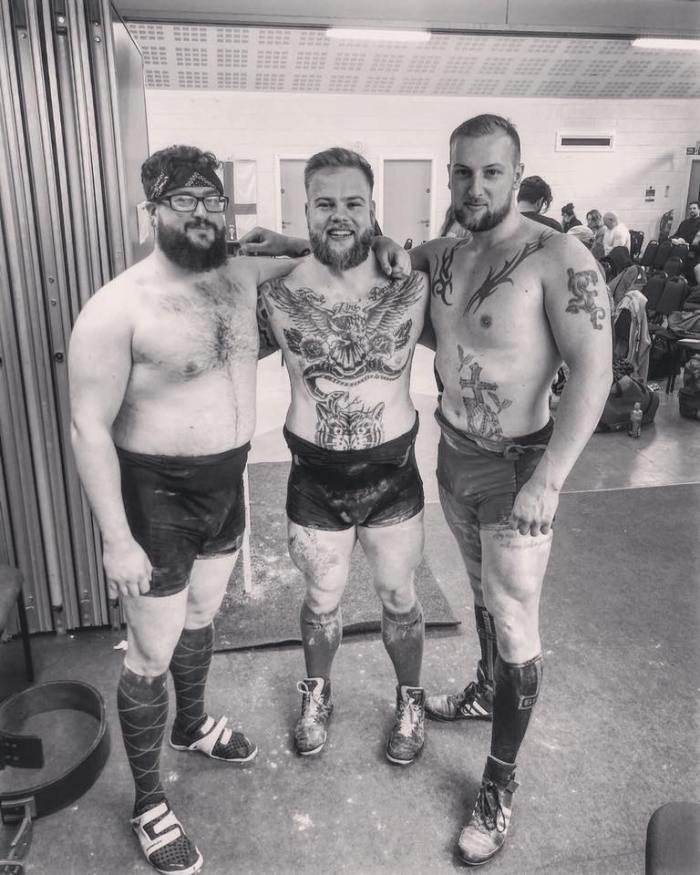
Me Bed liamThat’s almost a pec

The need for relatedness is defined as individuals’ inherent propensity to feel connected to others, that is, to be a member of a group, to love and care and be loved and cared for (Baumeister & Leary, 1995). The need for relatedness is satisfied when people experience a sense of communion and develop close and intimate relationships with others (Deci & Ryan, 2000). The assumption that individuals have the natural tendency to integrate themselves in the social matrix and benefit from being cared for is equally emphasized in developmental approaches such as Attachment Theory (Bowlby, 1969). It is consistent with concepts in organizational psychology such as social support (Viswesvaran, Sanchez, & Fisher, 1999)

In the context of powerlifting, we can use relatedness pretty much to mean having others to give a shit about your training and progress, and to reciprocate that. One of the best things I ever did for my powerlifting progress was joining West Riding Powerlifters.
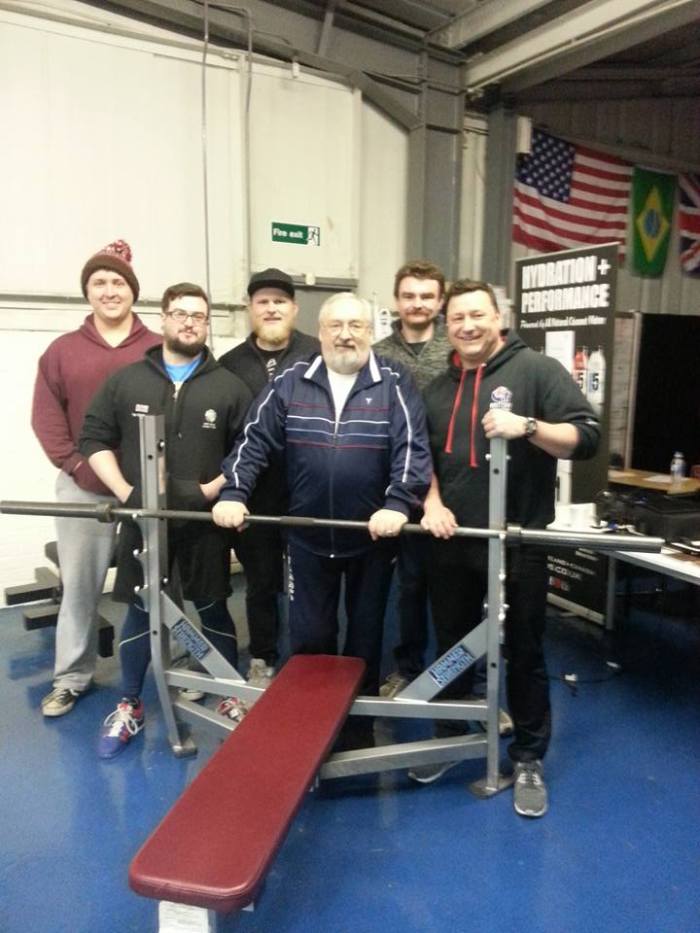
WRPL SheikoIf an article doesn’t feature a pic of Boris it’s not worth reading

As mentioned, relatedness is related (lol) to ‘Social Support’ theory. Social support is basically the perception and actuality that one is cared for, has assistance there if needed from others and belonging within a supportive social network. These support resources can be emotional (like nurturing a competitive mindset), informational (like explaining the science behind a programming decision), companionship (being a club/team mate), tangible (like lending someone equipment) or intangible (like offering personal advice such as “wash your knee sleeves”).

The below is from this page and I can’t be arsed to reword it just to make you think I’ve come up with something that sounds smart;

“Psychology literature had shown that the perception of available support can be a better predictor of health or well-being outcomes (Sarason, Pierce, & Sarason, 1990) ; researchers in sport psychology had also focused more on the perception of available support, which is called perceived support. It was shown that perceived support plays a significant role both for sport performance ( Rees & Freeman, 2010; Rees & Freeman, 2007) and psychological health outcomes, such as low levels of burnout (Tsuchiya, 2012) . As such, perceived support was commonly measured in research examining social support within a sport context.

In addition, to the perception of social support, more recently, researchers have moved their focus onto social support actually exchanged, which is called received support. Received support is defined as the actual receipt of social support reported by a recipient (Rees, 2007) . Received support has been reported, mostly in the interviews with athletes, as a significant factor in athletes’ self-confidence (Hays, Maynard, Thomas, & Bawden, 2007) , performance improvement (Rees & Freeman, 2010) , in dealing with negative psychological states due to injury in sport (Carson & Poleman, 2012) , competitive stressors (Weston, Thelwell, Bond, & Hutching, 2009) , and organizational stressors (Kristiansen & Roberts, 2010) .”

So how do we implement this?

You need to find your tribe.
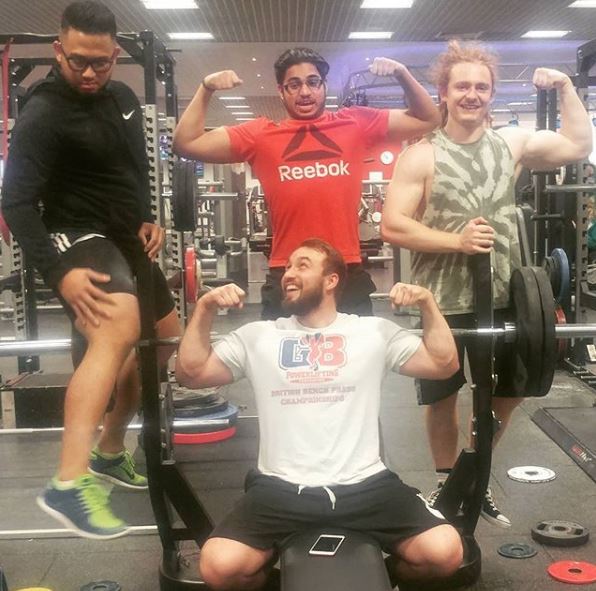
TatersI’m at least 50% responsible for this.

Join a gym where you’re not the strongest person, stuck in a corner apologising for using chalk and making noise. Even if you’re stuck in a commercial or bodybuilding gym, you can find people who have passion for making progress – make them your peers in the gym, even if they aren’t powerlifters. If there’s a group of people all training with a similar goal in your gym, make it formal and start a club. If you’re on different schedules get together once a week, fortnight or even monthly and train together. Get yourself around people who care about your goals and whose goals you care about.

DSLRWe all know one of these.

If you don’t have the opportunity to join a club, find a space online that cares. Our WRPL Facebook group is a good space for powerlifting banter, and Reddit’s r/powerlifting is also a nice place to start. Eat, Train, Progress is an excellent Facebook group full of people with lots of different goals, but who all care about fostering a supportive environment.

There are plenty of online spaces where you can find a community that you can be a part of and these are just a couple suggestions from my personal experience.

If you’re reading this as a coach, then it shouldn’t need saying that your athletes need to know you care about them. You need to be there for more than just prescribing setsxrepsxload. I know it can be time consuming but if a lifter is reaching out to you very often, especially for what appears to be trivial issues, consider that they may be needing to feel more supported in their journey, and just letting them know you’ve got their back and you’re proud of them can go a very long way.

Lifters, make sure you’re allowing yourself to build that relationship with your coach, don’t be afraid to be a little vulnerable and open yourself up when you need the support. Being a coachable athlete goes well beyond just doing your sets and hitting your macros, it’s very hard to get the most out of a closed book.

The most important thing here is to find yourself a community, even if you have to build it from the ground up. Again the majority of these suggestions are very obvious things you’ve probably considered already. The point here is to reflect on what you can do to make improvements; sometimes a tiny change has exponential returns. If you feel like you’d like more support in your powerlifting journey then Get in Touch.
Self Determinism Theory and Powerlifting pt 1

Recently I attended the TSA (check out the freebie page, it’s good) Pursuit of Strength seminar. Each of the 5 coaches presented on a separate topic: Bryce Lewis’s was based around Sports Psychology, and touched mainly on motivation.

Bryce

One of the areas discussed was Self Determination Theory (SDT);

SDT is “a macro theory of human motivation and personality that concerns people’s inherent growth tendencies and innate psychological needs. It is concerned with the motivation behind choices people make without external influence and interference. SDT focuses on the degree to which an individual’s behavior is self-motivated and self-determined”

SDT revolves around the belief that human nature exhibits persistent positive features, that show effort, agency and commitment in life that the theory refers to as ‘inherent growth tendencies’. People have innate psychological needs that are the basis for self motivation and personality integration.

What I’d like to take a look at is how we can look at this in an actionable context within powerlifting, the ways I implement this with my lifters and myself and how you might be able to implement something yourself. This will involve straying away from the confines of Self Determinism Theory and involve looking at other theories of behaviour within the categories SDT outlines (competence, relatedness and autonomy). There’s a chance I’ll misapply something here and there; it’s been almost a decade since I looked at motivational theory in any depth so my knowledge is a bit rusty, but hopefully there will be plenty of thought provoking ideas that can be actionable within your training and/or coaching.

SDT identifies three innate needs that, if satisfied, allow optimal function and growth:

Competence: Seeking to control the outcome and experience mastery

Relatedness: The universal want to interact, be connected to, and experience caring for others

Autonomy: The universal urge to be causal agents of one’s own life and act in harmony with one’s integrated self; however, Deci and Vansteenkiste note this does not mean to be independent of others

These needs are seen as universal necessities that are instinctually present, and persistent across age, gender, culture etc.

To actualise their inherent potential they need nurturing from the social environment. If this happens there are positive consequences (e.g. well being and growth) but if not, there are negative consequences.

So SDT emphasises humans’ natural growth toward positive motivation; however, this is thwarted if their basic needs are not fulfilled.

Act I: Competence.

Competence: Seek to control the outcome and experience mastery.

The most obvious way we can work towards this whilst powerlifting is to gain mastery over the technique we use whilst lifting. Gaining competence over something is incredibly rewarding, but the opposite is true too. If we lack the skill level necessary to perform a task it can be incredibly demotivating to keep butting your head against the wall and feeling like you’re not getting better.

We need to be mindful of this when prescribing supplementary and accessory work. If we’re meant to be doing single leg RDL’s and keep falling over because we’re losing balance, or doing pin squats but forever letting the hips shoot and we’re good morning-ing the bar instead then it can be very demoralizing.

Good morningThis is not my happy place

Make sure you’re building in opportunities to take the win where possible so you can feel competent! Set competence related goals, and celebrate when they’re met.

Let’s take a look at some theory as it relates to competence and motivation.

In 1959 Robert White coined the term ‘effectance’, defining it as the tendency to explore and influence our environment, arguing that organisms are intrinsically motivated to interact with their physical and social environment, If these interactions are successful it results in intrinsic rewards like feelings of efficacy and pleasure, and these motivate further efforts.

Whites theory was considered a novel approach at the time as it differed from popular traditional drive theories of human behaviour, and from the psychoanalytical instinct theory popularised by Freud (no longer was fancying your mum your sole reason for doing something).

FreudSometimes I dream about banging your mum.
In the late 1970s, Susan Harter extended White’s theory to  develop  a  more  complete  framework that she initially identified as effectance motivation theory but was later more commonly referred to as competence motivation theory. Similar to White, Harter also identified enjoyment as the reason individuals interact with their environment, but also expanded the idea to how effectance, or competence motivation, can vary across achievement domains such as physical, social, or mental. In each, individuals are motivated to engage in mastery attempts, for the purpose of developing or demonstrating competence. If successful at an optimally challenging task and they receive socio-emotional support from significant individuals, they will experience perceptions of of competence and performance control. This is why it’s a big deal when Boris Sheiko compliments your technique. Or upper:lower arm ratio.

Borisplease adopt me

High perceptions of competence and control result in feelings of pleasure that lead to maintenance of, or an increase in competence motivation.

In contrast to White, Harter also proposed that there was a negative response component: engaging and then failing in a mastery attempt, and not receiving praise from a significant individual (or receiving disapproval) will lead to decreased perceptions of competence and control in, along with anxiety and shame. This combination of events will lead to decreased effectance motivation in that particular domain.

So how do we make this actionable in our approach to powerlifting?

Firstly, for long term development we need to look at our training with a focus on developing competency, and rewarding competence mastery – i.e work on your technique and focus the ‘wins’ on how well you’re moving as much as we focus on the ‘win’ of the PB weight.

Avoid programming exercises we have little competence with. Not only does performing something you’re really bad at feel physically bad, but it’s also mentally draining and demoralising. As powerlifters we NEED to perform the competition lifts at some point in our training, but we have a cornucopia of assistance & accessory movements to choose from. So long as we’re picking a decent tool for the job, picking the movements the lifter actually enjoys is going reap far more benefits than something they hate. Offering the chance to work on that suitably difficult but still surmountable challenge will have a great impact on adherence and motivation.

Stay tuned for parts 2 and 3 where I’ll go over Autonomy and Relatedness.

If a guided approach to developing competence as a powerlifter sounds good, get in touch. I’ve currently got a few spaces left for one-to-one weekly online coaching.

If you liked this, I’d be very grateful if you could share it on your favourite social media.


Prophecy and Poverty: PMA for Gains.

I both love and hate the phrase ‘poverty bench’.

Whilst it so succinctly (and amusingly) describes a poor bench, it’s the kind of self-effacing joke a lifter can make about themselves that quickly turns into part of their identity.

poverty-bench-whos-laughing-nonp-this-is-how-you-fix-13674790aka ‘The Caine Method’

For years I had a terrible bench press. So bad I was actually convinced I’d never be able to reach the fabled ‘three plates’, that this level of achievement, this rite of manhood, would forever be beyond my grasp.

Then Boris Sheiko told me I was ‘built to bench’


By constantly telling myself I’d never be a good bencher I was establishing a self-fulfilling prophecy and letting my outlook affect my behaviour. Boris took that away from me, and things changed pretty rapidly.

What is Self-Fulfilling Prophecy?

“Self-fulfilling prophecy is a prediction that directly or indirectly causes itself to become true, by the very terms of the prophecy itself, due to positive feedback between belief and behavior. 20th-century sociologist Robert K. Merton is credited with coining the expression.”

Convinced I would never be able to have a decent bench, I rarely trained it with intent. I’d just go through the motions and try to get it out the way to finish the session. I spent hours and hours refining my technique on my squat, developing effective mobility and movement patterns, figuring out what kind of intensity and volume I responded well to and essentially putting some bloody effort into it. The same was true for deadlift.

Because of my attitude towards the bench press, I treat it like a red headed step child and let this situation occur. The solution was in my hands all along, but the negative self-talk and incorporating the ‘poverty bench’ into my identity as a lifter effectively stunted my progression.

This applies to any lift, but my main success with improving the bench press comes from the following points;

  • Training the bench with intent, instead of just going through the motions.
  • Make a serious effort with rehabbing my shoulder issues, instead of just avoiding the symptom triggers, (i.e benching).
  • Setting up properly every time, instead of just going through the motions, not respecting light weight etc. This feeds back into the first point.
  • Volume. More of it.
  • Remove negative self-talk. No more constant self-disparaging jokes about my bench, actually take some pride in progressing it even if it’s a bit slow, and remove the self-fulfilling prophecy of being a ‘poverty bencher’.

I feel like the last point is probably one of the most important.

benchPlease get in touch for my ‘Photoshop Mastery’ course.


You can see how once you start letting your negative attitude affect your behaviour, it quickly turns into a negative feedback loop where each step reinforces the next. The solution is to turn things around and use a positive mental attitude to feed positive behaviours and experience positive results!

There’s a very easy way you can immediately implement some positive mental training.

A 2017 study found that over a 12-week training period, simply adding positive self-talk and imagery between sets had a significant impact (see below) on strength gains over just training. The only differences between the groups were the mental training group did a 30 min visualization session and intra-set positive self-talk.

PMA GraphLovingly borrowed from MASS Issue 5. You should subscribe

 

Now the thing with implementing mental training is that it costs nothing. Nowt but time you’re already wasting on your phone. You don’t need any special equipment, you don’t need to spend anything, and if you do it as you warm and between work sets it doesn’t even take up any of your time. Visualising a perfect rep once you’ve set up under the bar/on the bench/addressing the bar, and turning negatives into positives between sets (i.e turn ‘OMFG my pause on the chest got as loose as a dropped kebab on that last set’ into ‘I will hold my pause tighter on the next set’), will quickly accrue lots and lots of positive mental training over the weeks.

Free gains, pretty much.

If you feel like you’d benefit from having someone help you along your powerlifting journey, including cultivating a better mindset towards training and competition, then get in touch.

On Inputs and Outputs

Post a form check on Facebook or Instagram, and you’ll get a variety of feedback. Let’s say you squat and you have a bit of knee cave going on. The advice you’ll get will be along the lines of “your knees are coming in” or “push your knees out”. This might sound helpful to a novice lifter who may be unaware it’s a bad thing, but to me it presents a problem: people tend to focus on the outputs of technique, rather than the inputs.

To illustrate imagine you were trying to drop weight to get down to your weight class for competition. Not knowing the best way to go about it, you ask for advice on social media. Imagine if the majority of advice was along the lines of “Your weight is too high, it should be under …kg”, or “You need to make the numbers on the scale lower”.

Homer-Simpson-weighs-himself#bulkingnotsulking

Sounds absurd, doesn’t it? There’s no mention of any kind of modification to the input, only that the output should be different. Unfortunately, it’s a commonly seen process with online form checking; advice is centred on the outputs and not the inputs.

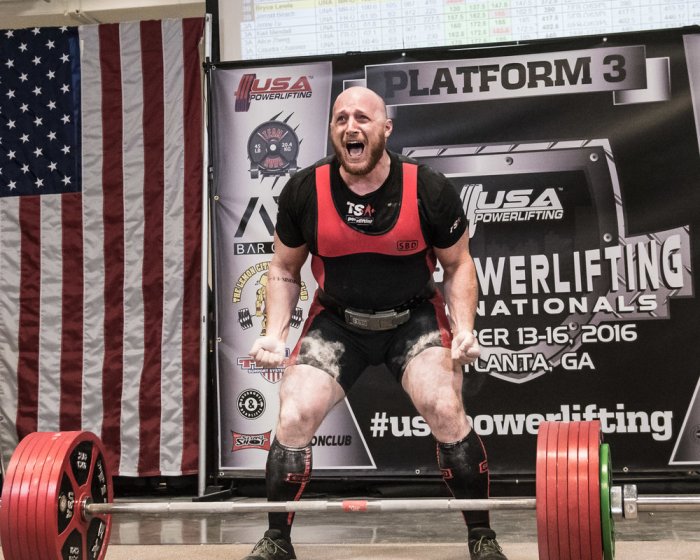
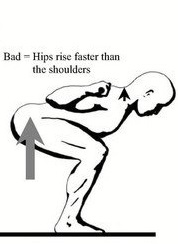
Let’s take the example of hip height in the deadlift. A common error I’ve seen a lot of recently is that as soon as the lifter breaks the bar off the floor, their hips shoot up and then they begin the pull in earnest. Some back rounding may accompany this, with the bar drifting forward, or the lifter gets into a bad position for the lockout and hitches the lift.

I’m guilty of it here – notice how I get into a good position with my setup then ruin it by sitting back too much, so my hips immediately shoot up to get me into a better position by putting my shoulders back over the bar.


As a response to this technique error you’ll then quite often see the lifter advised to start with their hips higher. Simple? Not quite.

einstein2ND“Everything should be made as simple as possible, but no simpler” – Albert Einstein

The problem with only addressing the output is that it oversimplifies things and could still allow plenty of other aspects of the lift to go wrong.

With the scenario mentioned, if the lifter is able to drop their hips too low, it’s likely they’ve started too far away from the bar. Only addressing the hip height here will mean once they break the floor the bar still has to come back towards them and the other errors mentioned are still present, still there to reduce potential performance or even possibly increase the chance of injury. Lifts have layers, like onions. Or Shreks. We need to peel the layers back to the central problem (i.e setting up too far from the bar or pushing the bar away with the shins when setting up, compared to hip height).

If the lifter starts the appropriate distance from the bar, hinges at the hip properly before grabbing the bar and then maintains neutral spine positioning whilst bringing the shins forward to the bar and keeps the scapula over the bar, then the hips will end up in the right position – it’s an output of getting all those inputs right.

So next time you’re assessing your lifts for technique errors, remember that technical errors are like Shreks.

ShrekSwole and Shreksy

They have layers you need to peel back so you can figure out the proper inputs. And if you’d like to fast track that process why not get in touch and book in for a consultation?